Costs and pricing
Part of Seven out of home advertising costs and pricing rules for England
What an out of home advertising budget template means for England buyers
A working out of home advertising budget template for England, covering rate cards, production, planning permission and the hidden line items that wreck media plans.
What to take away
- A working out of home advertising budget template has five separate lines: media rental, production, planning consent, creative compliance and contingency.
- An illustrative four-week campaign on two roadside 48-sheets in a mid-sized English city totals about £6,330 before any consent application.
- Advertisement consent, where a site needs it, is handled by the local planning authority, which works to an eight-week determination target.
- VAT at 20 per cent, agency commission and cancellation notice sit outside the headline rate and need their own rows.
The five lines and what each one pays for
An out of home advertising budget template is a planning tool, not a rate card. It records the assumptions you test before money leaves the business. Five rows cover almost every England campaign.
Budget template line items
- Media rental
- Production
- Installation
- Planning consent
- Contingency
| Budget line | What it pays for | How it is usually quoted |
|---|---|---|
| Media rental | Site rent paid to the owner | Per two or four week cycle |
| Production | Print, vinyl, framing, special build | Per artwork or per build |
| Planning consent | Application fee and agent time | Per site, where consent is needed |
| Creative compliance | Code checks and design briefing | Per campaign or training seat |
| Contingency | Site loss, weather, late creative | Percentage of media spend |
Media rental is normally the largest single row. Ask every site owner whether illumination, maintenance and digital playback fees are included, because those often arrive later as separate invoices. Digital sites skip print but add content production and scheduling.
Row-by-row rates differ by format, city and season. The costs and budget guide for England shows how each category is priced in practice.
Example: four weeks on two roadside 48-sheets
The figures below are illustrative planning assumptions for a small England campaign, not quoted market rates.
| Line | Assumption | Illustrative cost |
|---|---|---|
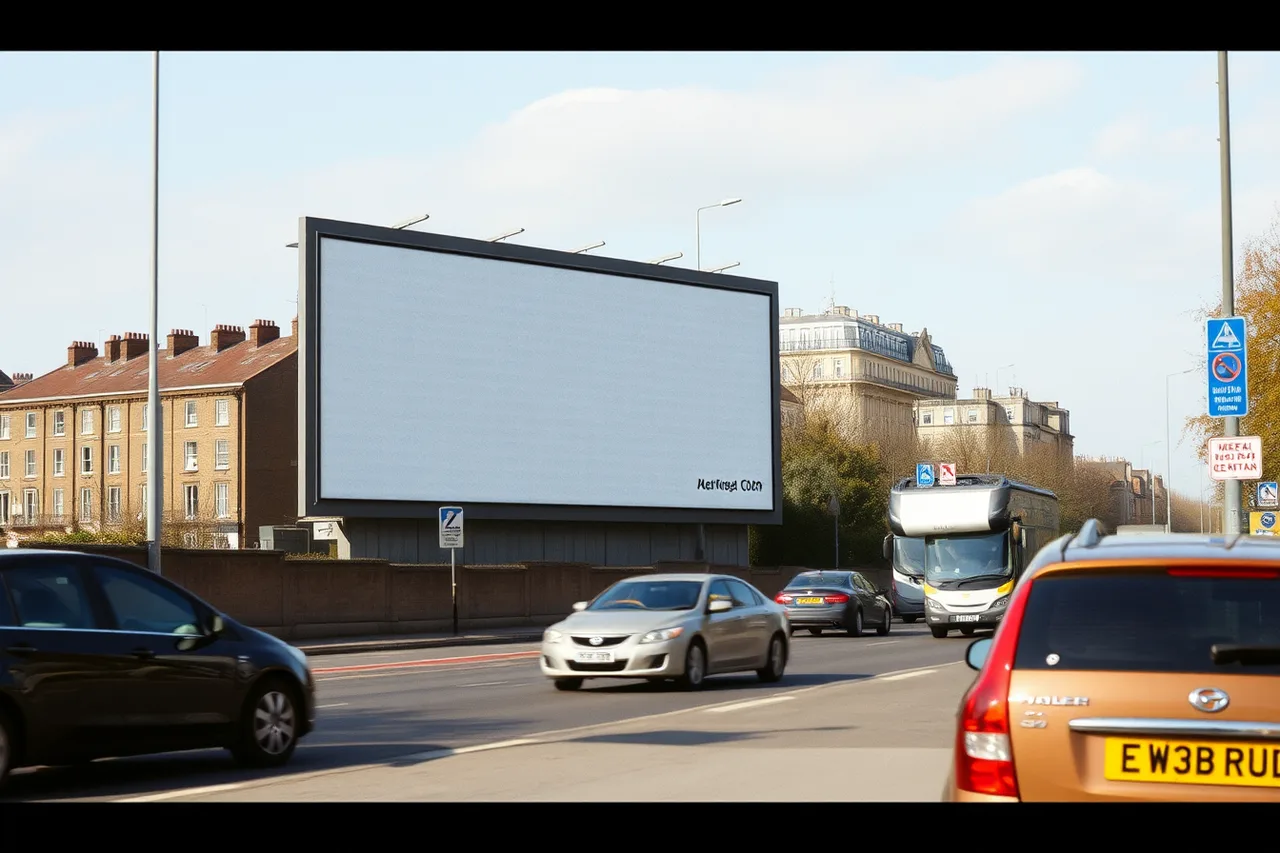
| Media | Two 48-sheets at £1,200 per two-week cycle, two cycles | £4,800 |
| Production | Two printed posters at £450 each | £900 |
| Creative compliance | One design briefing session | £150 |
| Contingency | 10 per cent of media spend | £480 |
| Total before consent | £6,330 |
Media is the biggest row. Two 48-sheet sites at £1,200 per two-week cycle, run for two cycles each, come to £4,800.
If one site needs express consent, add an illustrative £500 to £800 for the application fee and agent time. VAT at 20 per cent is usually added on top, so confirm whether a quote is gross or net.
How to build and test the numbers
- Gather rate cards from at least three site owners, and ask for illumination, maintenance and digital playback fees in writing.
- Write down the assumptionssite count, cycle length, format, and whether each site needs consent.
- Model three casesyour base case, a 10 per cent rate rise, and the loss of one site mid-flight.
- Reconcile supplier invoices against the template after each campaign, then replace estimated rates with invoiced ones.
Late creative is the usual cause of overspend. Every day a print file is delayed, installation slots move and paid media days are lost. Site loss is the second risk, because an owner can withdraw a location.
A council can also act on an unauthorised display. Our breakdown of hidden costs in England lists the charges that never reach a rate card, including removal and reinstatement.
Planning consent, VAT and cancellation lines
Consent is the line most often missed. Some displays are permitted without express consent, and the advertiser guidance on outdoor advertisements and signs sets out the categories.
The consent regime sits within the system created by the Town and Country Planning Act 1990. Local planning authorities work to an eight-week determination target for most advertisement applications. That figure is a target, not a guarantee, and some authorities take longer.
Budget an illustrative £500 to £800 per site for the statutory fee and agent time. Two further rows belong in every template: VAT at 20 per cent, and agency commission, which is often charged as a percentage of media spend.
Rejected artwork costs more than a briefing. Codes on harm, offence and misleading claims apply to out of home advertising, and the ASA advertising codes are where those rules sit. Ask each supplier which basis they quote on.
Cancellation terms decide what a pulled site costs. Notice periods differ between owners, so ask for the window in writing before signing and record it in the template. The commercial contract clauses checklist covers the terms worth reading first.
Common questions
Does every outdoor site in England need planning permission?
No. Some displays are permitted without express consent while others need an application, so check site by site rather than assuming.
How much contingency should the template hold?
There is no fixed rule. Five to ten per cent of media spend is a common planning assumption, and the right figure depends on site count and how much bespoke production you buy.
Should VAT and agency commission be separate rows?
Yes. Both sit outside the displayed rate, and commission is often a percentage of media spend, so keep them visible instead of folding them into media.
How do I know the template is working?
When invoiced costs replace your estimates and the gap between the two narrows. After two or three cycles it becomes a forecasting tool.